Wiseman et al., 2003
What did the researchers find?
The paper is reported in its own wording. Historic Royal Palaces later summarised the same work in a different way; that later wording is kept on the palace page, not quietly mixed into these results.
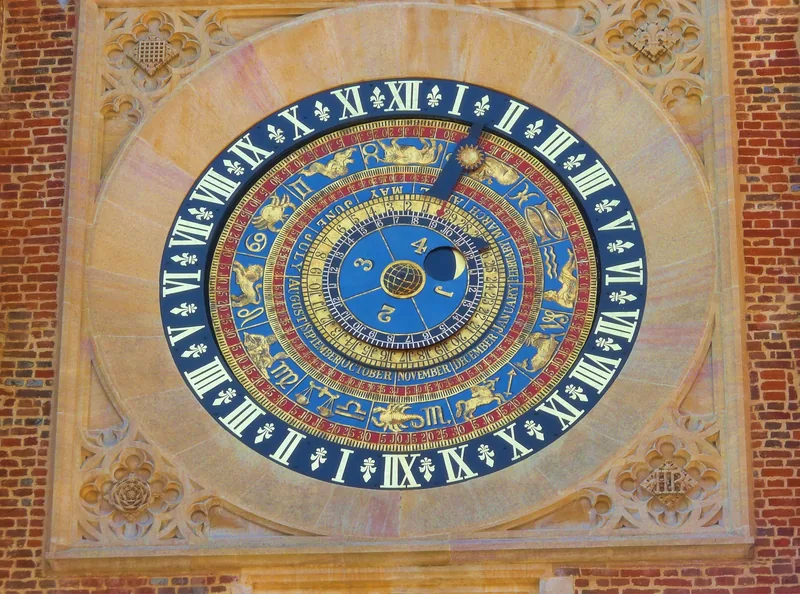
Wiseman, Watt, Stevens, Greening and O’Keeffe published “An investigation into alleged ‘hauntings’” in the British Journal of Psychology, volume 94, pages 195–211, doi 10.1348/000712603321661886. Experiments were run at Hampton Court Palace and the South Bridge Vaults. Participants walked around and reported where they experienced unusual phenomena. [source]
The abstract’s own result is the one quoted here. “Results revealed significantly more reports of unusual experiences in areas that had a reputation for being haunted. This effect was not related to participants’ prior knowledge about the reputation of these areas. However, the location of participants’ experiences correlated significantly with various environmental factors, including, for example, the variance of local magnetic fields and lighting levels. These findings strongly suggest that alleged hauntings may not necessarily represent evidence for ‘ghostly’ activity, but could be, at least in part, the result of people responding to ‘normal’ factors in their surroundings.” [source]
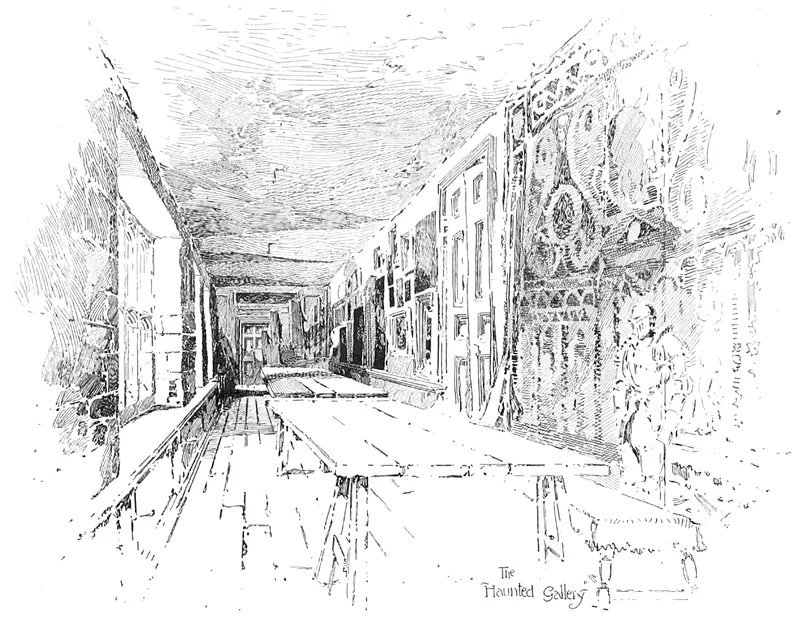
Experiment 1, Hampton Court
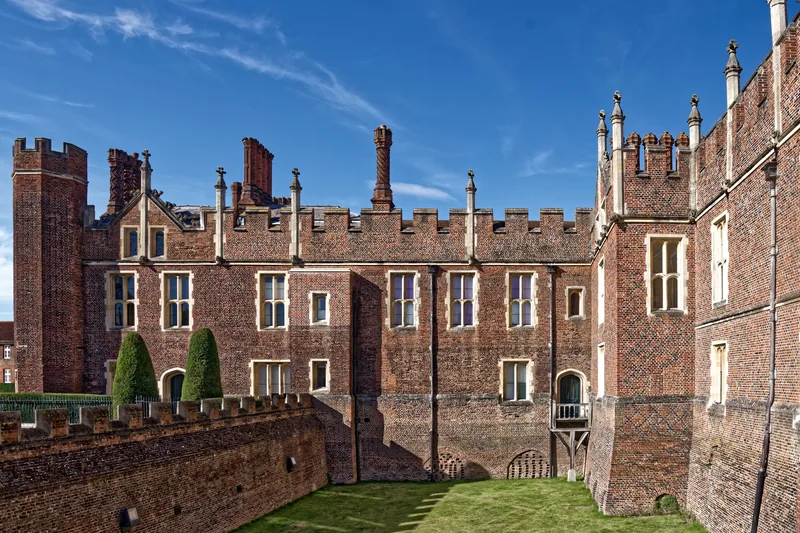
The palace experiment ran in “late May/early June 2000.” Visitors were self-selecting people who had seen leaflets, and they knew they were taking part in a scientific investigation. There were 18 sessions over 6 days, with a maximum of 40 people a session. “There were 678 participants who each attended 1 of the 18 sessions.” After exclusions for incomplete questionnaires (131 then 85), “the number of participants remaining was 462 (163 males, 299 females; mean age: 35.0, age range: 7 to 82, SD= 16.3).” [source]
There were 431 unusual experiences: 189 (43.8%) in the Haunted Gallery and 242 (56.2%) in the Georgian Rooms. 215 participants (46.5%) reported at least one experience; among those, the mean was 2.0 (SD 1.45). “Approximately two thirds of these experiences involved an unusual change in temperature.” The remaining third included dizziness, headaches, sickness, shortness of breath, some form of ‘force’, a foul odour, a sense of presence and intense emotional feelings. [source]
Asked whether the experiences were due to a ghost: 8 (3.72%) ‘Definitely yes’, 22 (10.23%) ‘Probably yes’, 80 (37.21%) ‘Uncertain’, 87 (40.46%) ‘Probably no’, 18 (8.37%) ‘Definitely no’. The authors stated a chance baseline: “By chance, it was expected that approximately 29% of participants’ unusual experiences would be reported in the ‘haunted’ areas of the Haunted Gallery, and 25% in the Georgian Rooms. However, groups of participants visiting both rooms reported significantly more unusual experiences in the ‘haunted’ areas within both locations.” Prior knowledge “was not significantly related to the percentage of experiences reported” in those areas. [source]
Magnetic field strength was not significantly different (1-sample t(32) = .82, p = .42). “The variance of the local magnetic field was significantly greater in ‘haunted’ than ‘control’ areas,” and there was a significant relationship between that variance and the mean number of unusual experiences. [source]
Belief-in-ghosts items from Questionnaire 1 are referred by the authors to a separate 2002 paper in the Journal of Parapsychology. This site does not treat Historic Royal Palaces’ later sentence, “believers reported more spooky sensations overall,” as a finding quoted from the 2003 results section. [source] [source]
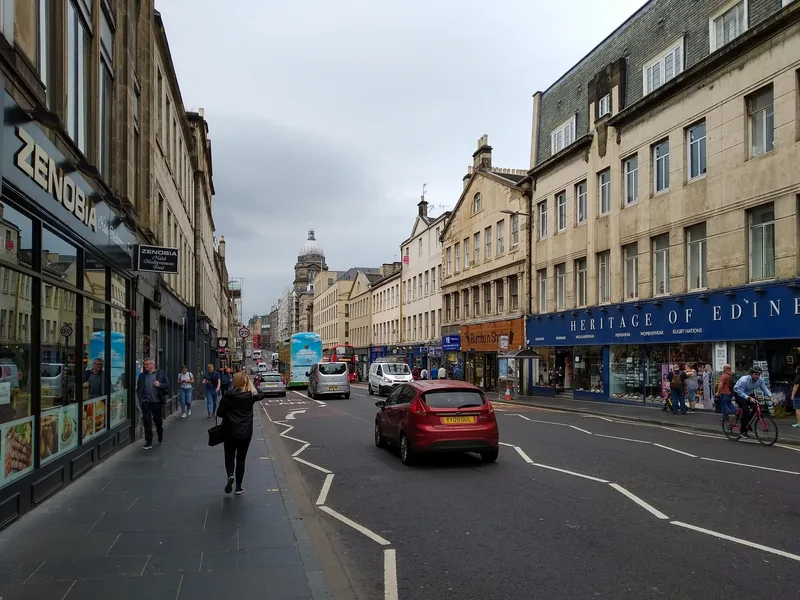
Experiment 2, and a shared conclusion
The vaults experiment is told in full on the vaults page. The discussion of both studies is short and consistent: “The results of Expts 1 and 2 are highly consistent, with around 45% of participants in each experiment reporting at least one unusual experience.” [source]
Keep exploring
- Hampton Court stories — the official legends, in official wording.
- The Edinburgh vaults — the Haunted Order, and the correlations.
- Field notes — why the palace’s later summary is kept apart.
Enjoyed this hauntings desk?
No pop-ups. No intrusive advertising. Just interesting stuff. A little support helps the next unexplained.im site get built.