Myths versus facts
A legend is not rewritten as a finding
Twelve claims, set beside official palace wording or the 2003 paper’s own sentences.
The claim
The palace presents the ghosts as proved fact.
What the official page or paper says
Historic Royal Palaces tells stories, and hedges them: “reported,” “it is claimed,” “it is said,” “Legend has it,” “allegedly.” It also says early postcards were faked. [source] [source]
The claim
Jane Seymour died twelve days after Edward’s birth, according to the official hauntings page.
What the official page or paper says
That page says she died “only a few days after delivering.” This site does not blend that wording with any other page’s “twelve days.” [source]
The claim
The run along the Haunted Gallery is told as plain history on every official page.
What the official page or paper says
The 1541 charge and later execution are historical statements on the gallery page. The run itself is “Legend has it,” and the ghost “allegedly.” [source]
The claim
The 1999 faintings are a finding of the Wiseman study.
What the official page or paper says
They are a Historic Royal Palaces ‘Did you know?’ note, not part of the 2003 paper. [source]
The claim
The 2003 paper proved that ghosts were present.
What the official page or paper says
The authors wrote that alleged hauntings “may not necessarily represent evidence for ‘ghostly’ activity,” and might reflect ordinary environmental factors. [source]
The claim
People only reported unusual feelings if they already knew a room was haunted.
What the official page or paper says
The paper says the effect “was not related to participants’ prior knowledge.” In the vaults, the correlation remained after people with prior knowledge were excluded. [source]
The claim
Most people who felt something unusual said it was definitely a ghost.
What the official page or paper says
Only 3.72% said ‘Definitely yes.’ 8.37% said ‘Definitely no.’ The largest groups were ‘Probably no’ and ‘Uncertain.’ [source]
The claim
Magnetic fields in the vaults were inherently anomalous.
What the official page or paper says
The authors wrote that the measurements were “within the natural fluctuation ranges and are not inherently anomalous.” [source]
The claim
A later palace summary can be quoted as if it were the 2003 results section.
What the official page or paper says
HRP’s wording, including “believers reported more spooky sensations overall,” is kept as HRP’s, not treated as a 2003 results quotation. The authors pointed belief items to a 2002 paper. [source] [source]
The claim
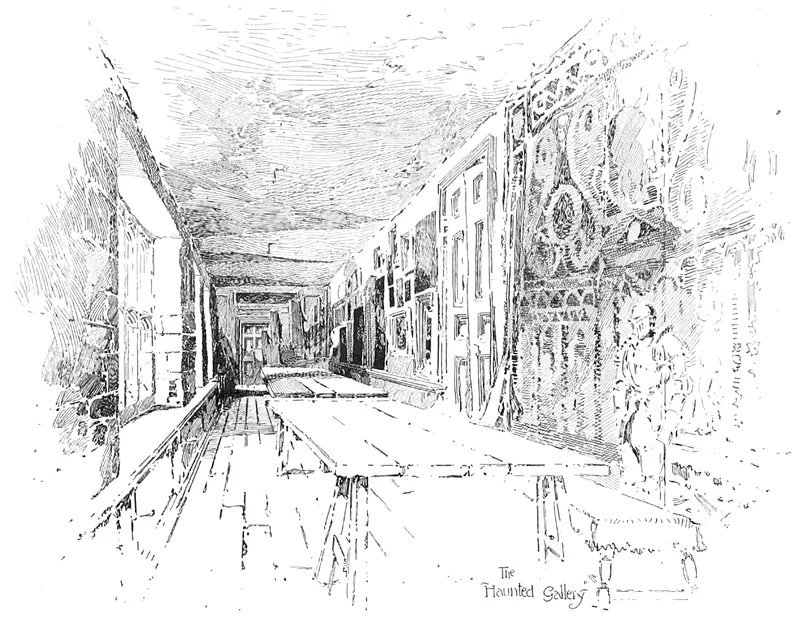
The 1897 gallery picture is a photograph of a ghost.
What the official page or paper says
It is a book illustration by Herbert Railton. This site does not present any image as a photograph of a ghost. [source]
The claim
The experiment was a secret test of unsuspecting tourists.
What the official page or paper says
Participants “knew they were taking part in a scientific investigation.” [source]
The claim
The two experiments disagreed about how often people reported something unusual.
What the official page or paper says
The authors called the results “highly consistent, with around 45% of participants in each experiment reporting at least one unusual experience.” [source]
Keep exploring
- The fact file — the official lines in a straight list.
- Field notes — where two official voices are kept apart.
Enjoyed this hauntings desk?
No pop-ups. No intrusive advertising. Just interesting stuff. A little support helps the next unexplained.im site get built.