From faked postcards to a correlation that survived prior knowledge
Palace items are told as Historic Royal Palaces tells them. Research items use the 2003 paper’s own wording.
1. Proof that was faked up
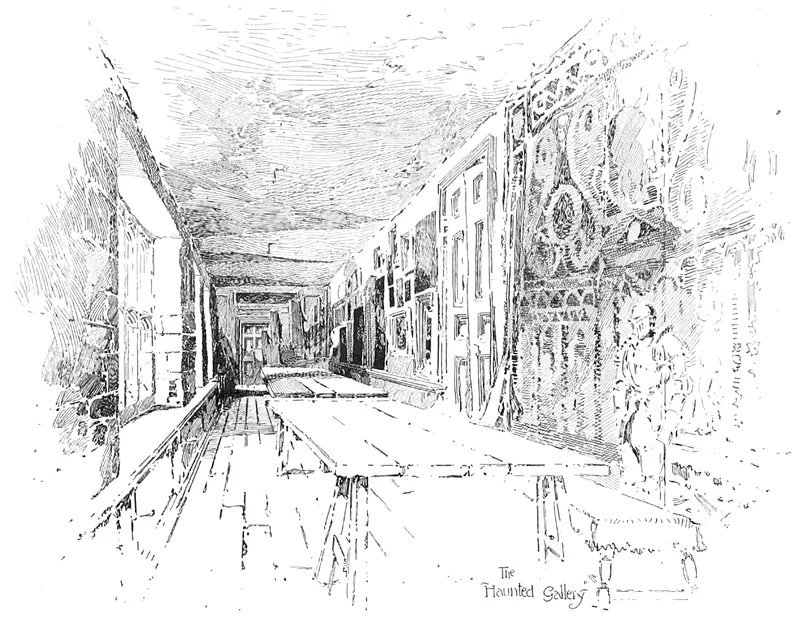
The Haunted Gallery at Hampton Court Palace, illustrated by Herbert Railton in 1897. This is a book illustration, not a photograph of a ghost. Historic Royal Palaces notes that early 1900s postcards were faked double-exposed photographs offered as ‘proof’. The file is in the public domain.Illustration: Herbert Railton, 1897 · Public domain · Wikimedia Commons
Early 1900s postcards were “faked up double exposed photographs offered as spine-tingling ‘proof’.” The illustration on this page is a book picture from 1897, not a photograph of a ghost. [source]
2. A pale figure, reported
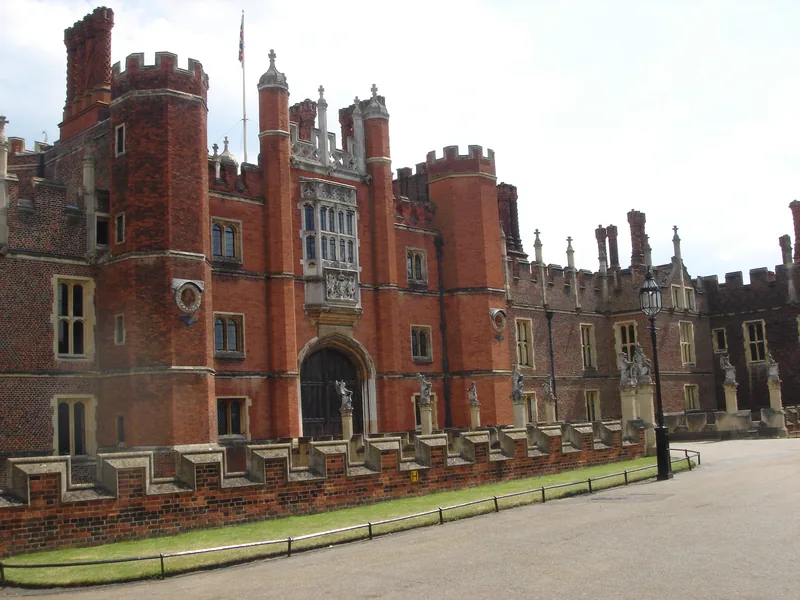
Hampton Court Palace, photographed by Daniel Newman on 27 July 2008. The file is in the public domain.Photo: Daniel Newman, 27 July 2008 · Public domain · Wikimedia Commons
A pale figure “is reported to appear on the Silverstick Stairs” on the anniversary of Edward’s birth in October 1537. Jane Seymour, the same page says, died “only a few days after delivering.” [source]
3. It is claimed, it is said
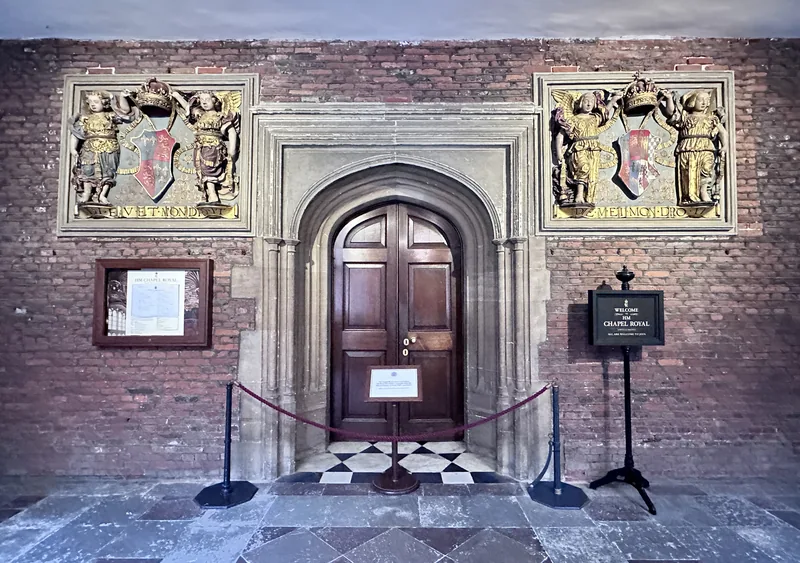
The door to the Chapel Royal at Hampton Court Palace, photographed by APK. On the official gallery page, a legend says Catherine Howard ran toward this chapel and was seized just before the door. The file is CC BY 4.0.Photo: APK · CC BY 4.0 · Wikimedia Commons
Catherine Howard’s run along the Haunted Gallery is introduced with “it is claimed” and “it is said.” The gallery page uses “Legend has it” and “allegedly.” [source][source]
4. A historical charge, and a legend
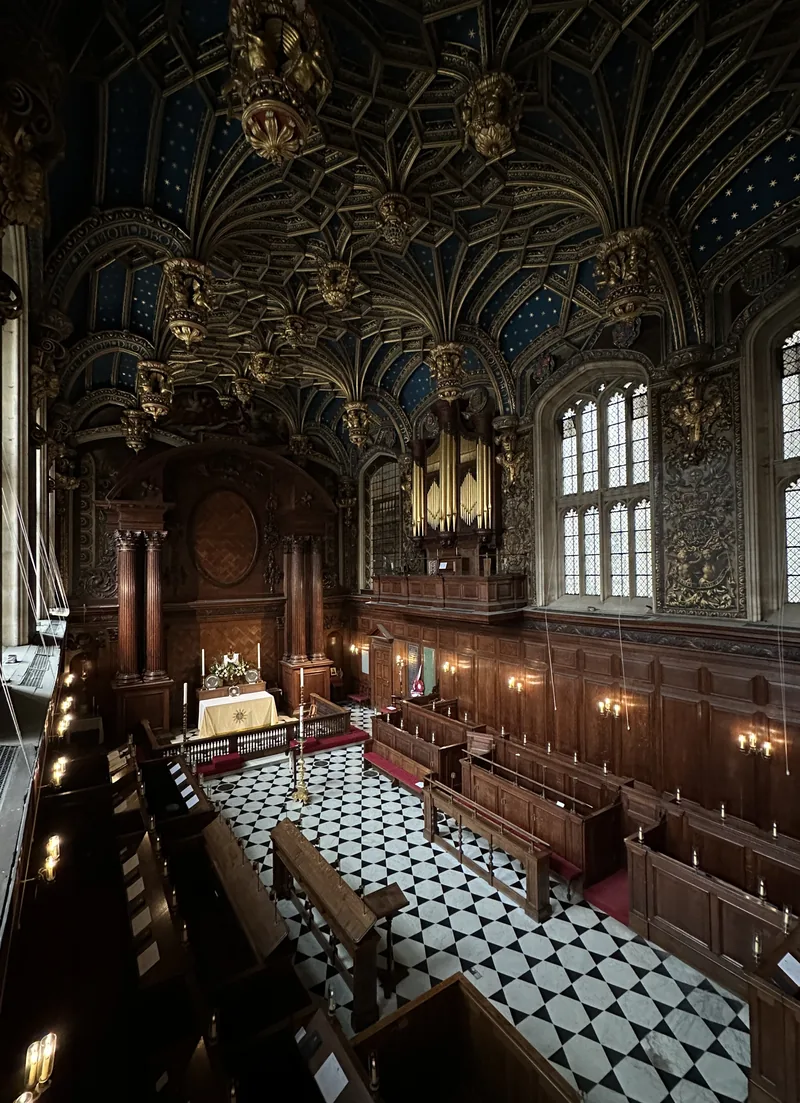
The Chapel Royal at Hampton Court Palace, photographed by APK. Historic Royal Palaces invites visitors to walk Henry VIII’s route from his private apartments to the Chapel Royal. The file is CC BY 4.0.Photo: APK · CC BY 4.0 · Wikimedia Commons
In 1541, the gallery page says, Catherine Howard discovered she was to be charged with adultery, and was executed just three months later. The run to the chapel door is legend. [source]
5. A spinning wheel, and a legend
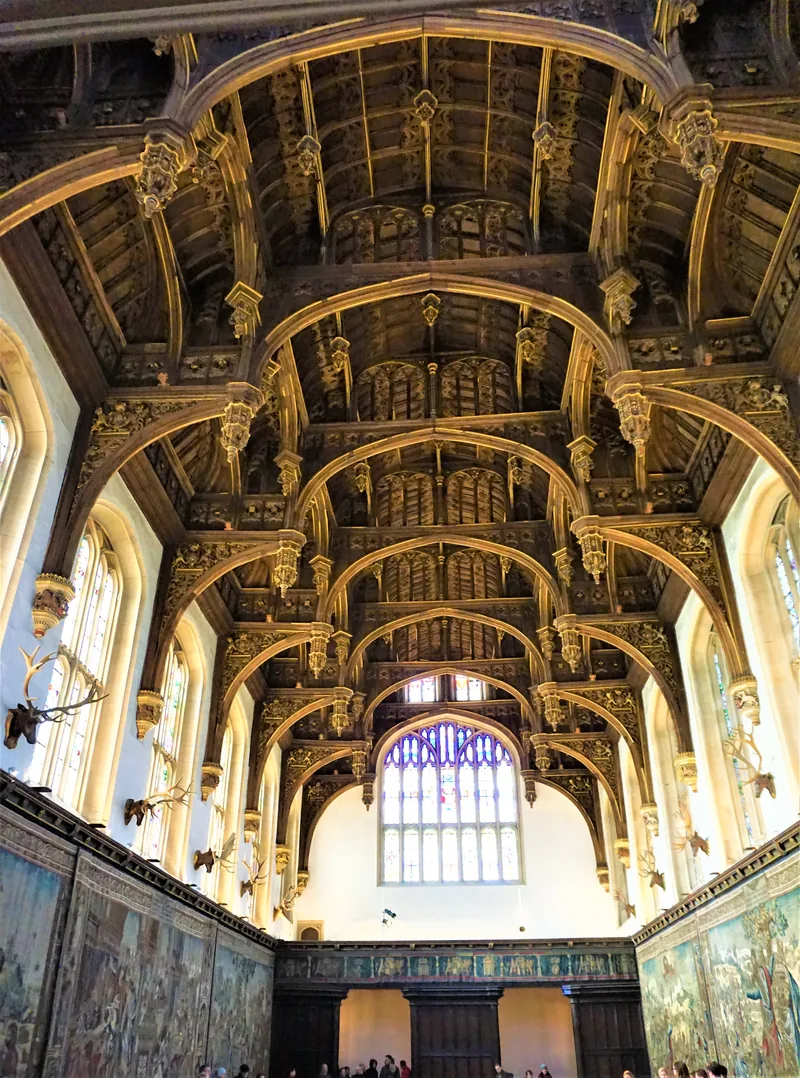
The Great Hall at Hampton Court Palace, photographed by Joyofmuseums on 30 December 2017. The file is CC BY-SA 4.0 and is used on the website only.Photo: Joyofmuseums, 30 December 2017 · CC BY-SA 4.0 (website only) · Wikimedia Commons
Sybil Penn nursed Elizabeth I through smallpox in 1562 and “died soon afterwards.” Her tomb was disturbed in 1829. The spinning-wheel story is “Legend has it.” [source]
6. Two visitors, one spot, 1999
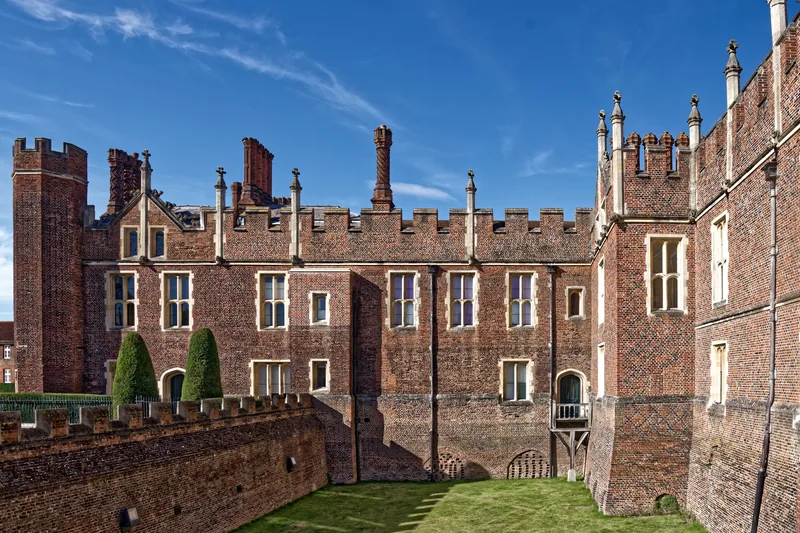
The west front of Hampton Court Palace, photographed by Tilman2007 on 23 August 2023. The file is CC BY-SA 4.0 and is used on the website only, not in the typographic fact sheets.Photo: Tilman2007, 23 August 2023 · CC BY-SA 4.0 (website only) · Wikimedia Commons
On one day in 1999, during separate tours, two female visitors fainted in exactly the same spot in the Haunted Gallery. That is a Historic Royal Palaces note, not part of the 2003 study. [source]
7. More reports in haunted-reputation areas
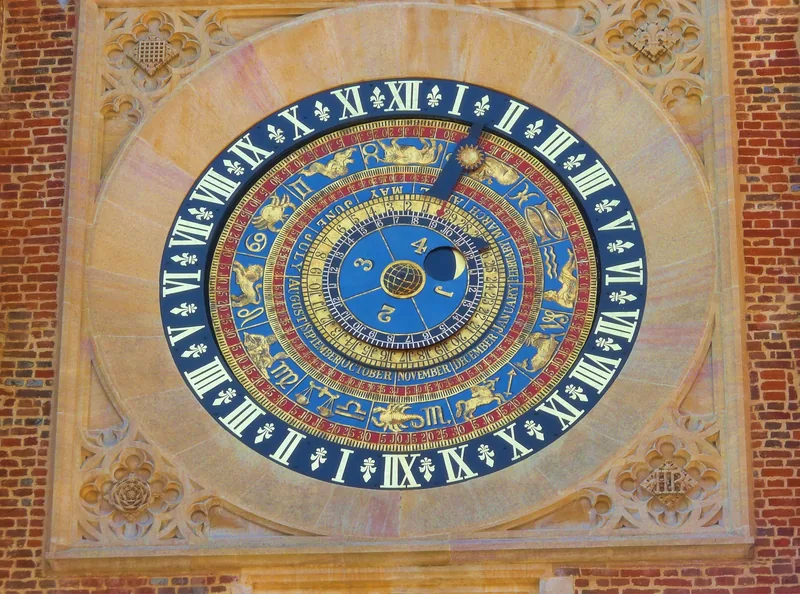
The clock in Clock Court at Hampton Court Palace, photographed by Mike Cattell on 11 April 2010. The Wikimedia Commons file is titled Hampton Court Astrological Clock. The file is CC BY 2.0.Photo: Mike Cattell, 11 April 2010 · CC BY 2.0 · Wikimedia Commons
The 2003 paper found significantly more unusual experiences in areas with a haunted reputation, and that this was not related to prior knowledge. [source]
8. Around 45 percent felt something unusual
The Haunted Gallery at Hampton Court Palace, illustrated by Herbert Railton in 1897. This is a book illustration, not a photograph of a ghost. Historic Royal Palaces notes that early 1900s postcards were faked double-exposed photographs offered as ‘proof’. The file is in the public domain.Illustration: Herbert Railton, 1897 · Public domain · Wikimedia Commons
The authors wrote that the two experiments were “highly consistent, with around 45% of participants in each experiment reporting at least one unusual experience.” [source]
9. Two thirds felt a change in temperature
Hampton Court Palace, photographed by Daniel Newman on 27 July 2008. The file is in the public domain.Photo: Daniel Newman, 27 July 2008 · Public domain · Wikimedia Commons
At Hampton Court, approximately two thirds of the unusual experiences involved an unusual change in temperature. [source]
10. Only 3.72 percent said ‘definitely yes’
The Chapel Royal at Hampton Court Palace, photographed by APK. Historic Royal Palaces invites visitors to walk Henry VIII’s route from his private apartments to the Chapel Royal. The file is CC BY 4.0.Photo: APK · CC BY 4.0 · Wikimedia Commons
Of those at Hampton Court who had an unusual experience and answered the ghost question, 3.72% said ‘Definitely yes,’ and 8.37% said ‘Definitely no.’ [source]
11. Variance, not strength
The clock in Clock Court at Hampton Court Palace, photographed by Mike Cattell on 11 April 2010. The Wikimedia Commons file is titled Hampton Court Astrological Clock. The file is CC BY 2.0.Photo: Mike Cattell, 11 April 2010 · CC BY 2.0 · Wikimedia Commons
Magnetic field strength was not significantly different; the variance of the local field was greater in ‘haunted’ than ‘control’ areas. [source]
12. Ten vaults, and a stronger correlation after knowledge was excluded
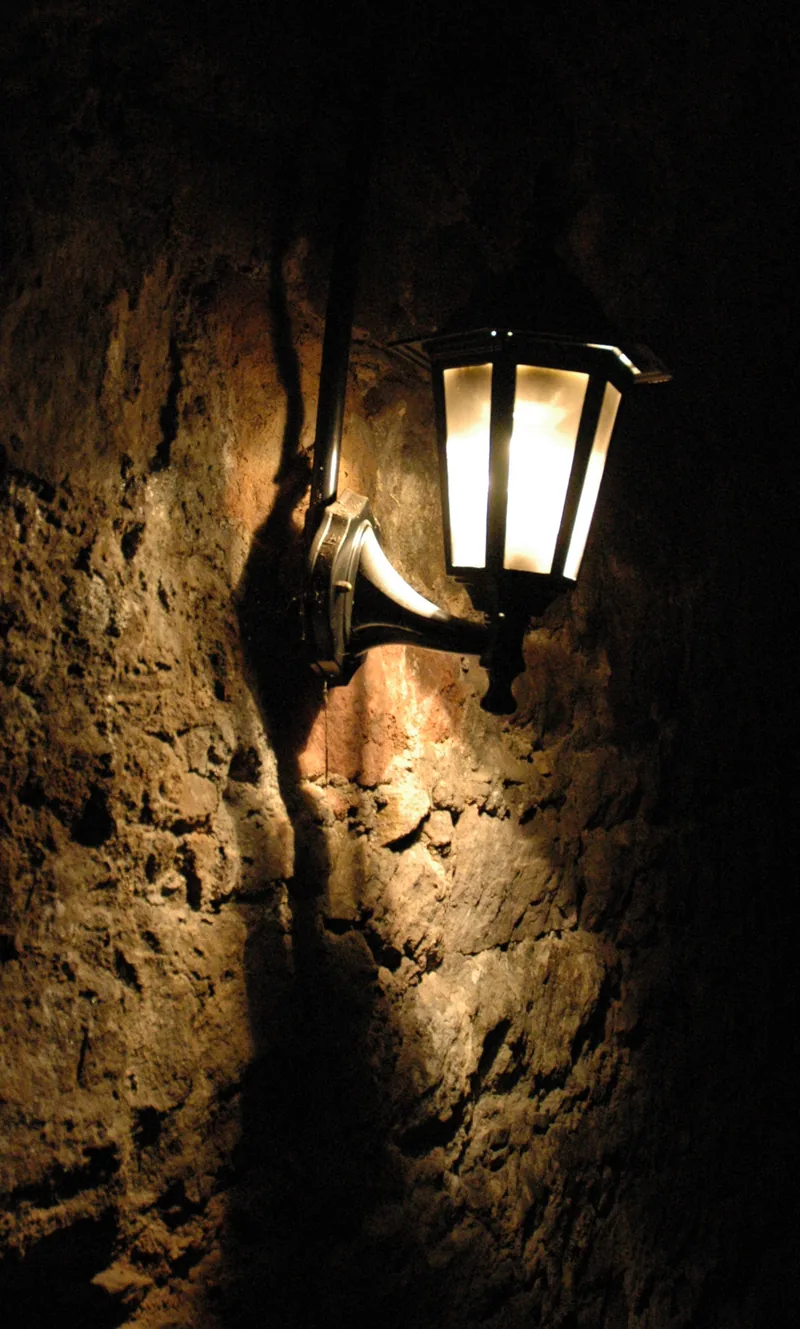
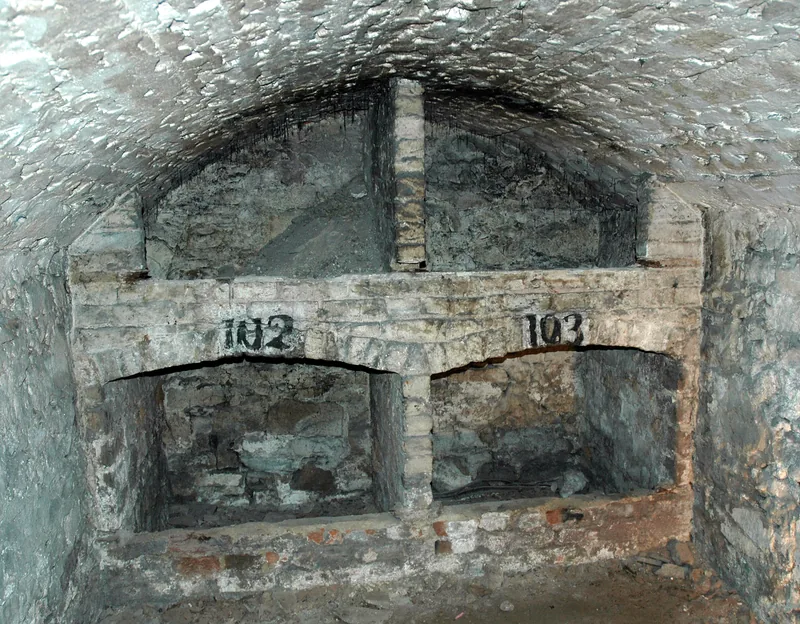
A chamber in the Edinburgh vaults, photographed by Kjetil Bjørnsrud in 2005. The Commons filename is Edinburgh_valuts_1.jpg, with a typo in ‘vaults’. The 2003 paper’s second experiment took place in ten of the South Bridge Vaults. The file is CC BY 2.5 and is used on the website only.Photo: Kjetil Bjørnsrud, 2005 · CC BY 2.5 (website only) · Wikimedia Commons
After excluding 31 people with prior knowledge, the correlation between the Haunted Order and reports rose from rho = .76 to rho = .87. [source]
13. Not inherently anomalous
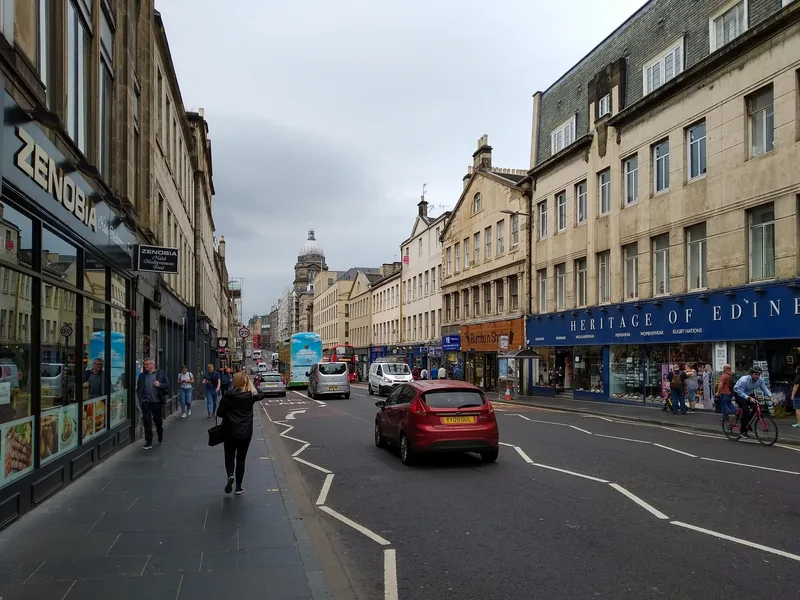
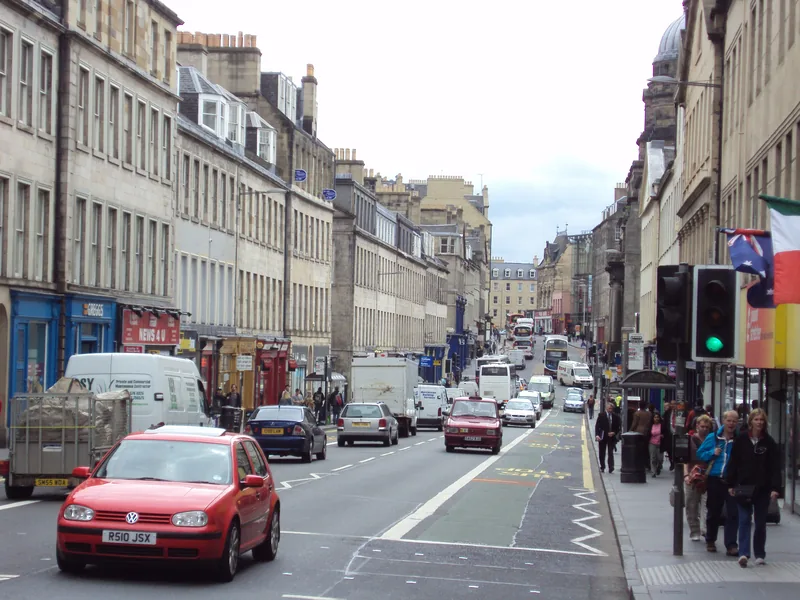
South Bridge, Edinburgh, photographed by Matti Blume. The 2003 paper’s second experiment was conducted in ten of the South Bridge Vaults. The file is CC BY-SA 4.0 and is used on the website only.Photo: Matti Blume · CC BY-SA 4.0 (website only) · Wikimedia Commons
Magnetic readings in the vaults were “within the natural fluctuation ranges and are not inherently anomalous.” [source]
14. Light, floorspace and height
South Bridge, Edinburgh, photographed by Rept0n1x. The file is CC BY-SA 3.0 and is used on the website only.Photo: Rept0n1x · CC BY-SA 3.0 (website only) · Wikimedia Commons
Light outside the vault, floorspace and height were positively correlated with the Haunted Order. [source]
15. A walk to the Chapel Royal
The door to the Chapel Royal at Hampton Court Palace, photographed by APK. On the official gallery page, a legend says Catherine Howard ran toward this chapel and was seized just before the door. The file is CC BY 4.0.Photo: APK · CC BY 4.0 · Wikimedia Commons
The official gallery page invites you to walk Henry VIII’s route from his private apartments to the Chapel Royal, now lined with 16th-century paintings, and to see the Haunted Gallery. [source]
16. The authors’ own caution
A second view of the Edinburgh vaults, photographed by Kjetil Bjørnsrud in 2005. The Commons filename is Edinburgh_valuts_2.jpg. The file is CC BY 2.5 and is used on the website only.Photo: Kjetil Bjørnsrud, 2005 · CC BY 2.5 (website only) · Wikimedia Commons
Alleged hauntings “may not necessarily represent evidence for ‘ghostly’ activity, but could be, at least in part, the result of people responding to ‘normal’ factors in their surroundings.” [source]
Keep exploring
The fact file — official sentences and figures, gathered in one place.